Biomass
Fisheries management
Antarctic ecosystem
Climate
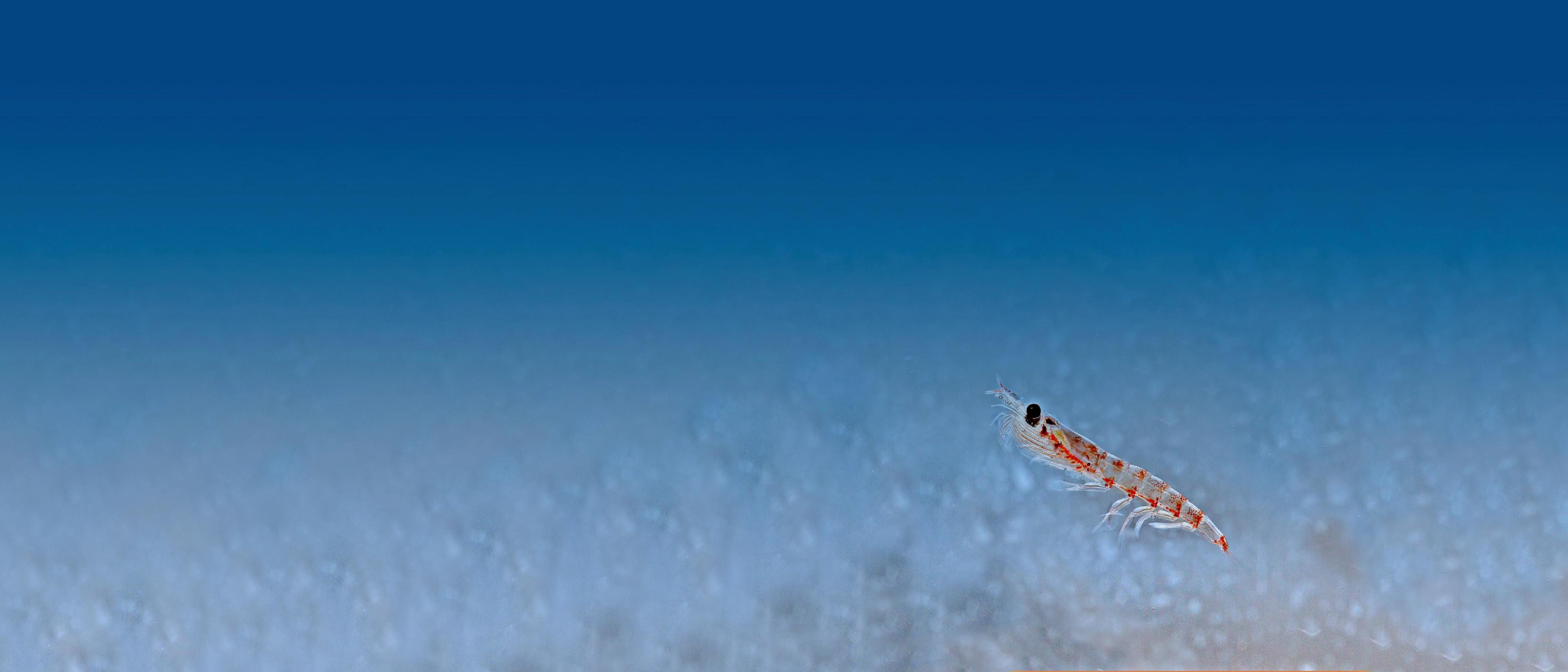
Krill (Euphausia superba)
Adjusting the Management of the Antarctic Krill Fishery to Meet the Challenges of the 21st Century
Summary
This perspective article addresses critical gaps in Antarctic krill fishery management as CCAMLR faces unprecedented challenges. With krill catches reaching record highs of 0.5 million tons in 2024 and the loss of spatial catch restrictions, the authors propose implementing a "Krill Stock Hypothesis" framework to revolutionize management approaches. The paper demonstrates how fishing vessels can serve as valuable data collection platforms while highlighting the urgent need for industry-science collaboration and sustainable funding mechanisms. The research emphasizes that current management relies on 25-year-old biomass data and fails to account for climate change impacts on krill populations.
Key Findings
1
CCAMLR failed to renew spatial catch limits in 2024, removing all geographic restrictions on 0.62 Mt annual quota2
Current management based solely on historical catches and single 2000 biomass survey from 25 years ago3
Krill fishery reached record 0.5 Mt catch in 2024, with concentrated fishing pressure in ecologically sensitive areas4
Fishing vessels can provide critical real-time data on krill demographics, distribution, and predator interactions5
Industry-science collaboration essential for sustainable long-term monitoring and data collection6
Climate change and recovering whale populations increasing pressure on krill stocks and fishery sustainability7
Proposed "Krill Stock Hypothesis" framework integrates ecological factors, spawning patterns, and habitat connectivity8
Need for multisector funding model combining government, industry, and NGO resources for researchAbstract
Antarctic krill (Euphausia superba) is the central prey species in the Southern Ocean food web, supporting the largest and fastest-growing fishery in the region, managed by the Commission for the Conservation of Antarctic Marine Living Resources (CCAMLR). Climate change is threatening krill populations and their predators, while current catch limits do not take into account climate variability or krill population dynamics. In 2024, CCAMLR was unable to renew its spatial catch limits, highlighting the urgent need for improved management of the krill fishery to prevent any harm to the Southern Ocean ecosystem. To address this, we propose a management framework that integrates variability in krill recruitment and key pathways between spawning and nursery areas—a krill stock hypothesis—to inform decisions on catch limits and conservation measures.Published in
Proceedings of the National Academy of Sciences (PNAS)
2025Authors
Bettina Meyer
Javier A. Arata
Angus Atkinson
Dominik Bahlburg
Kim Bernard
César A. Cárdenas
Susie M. Grant
Simeon L. Hill
Lukas Hüppe
Taro Ichii
So Kawaguchi
Bjørn A. Krafft
Sara Labrousse
Dale Maschette
Andrea Piñones
Christian Reiss
Bernd Siebenhüner
Zephyr Sylvester
Philippe Ziegler
Institutions
Alfred Wegener Institute Helmholtz Centre for Polar and Marine Research, Germany
Association of Responsible Krill Harvesting Companies, Australia
Plymouth Marine Laboratory, United Kingdom
Oregon State University, USA
Instituto Antártico Chileno, Chile
British Antarctic Survey, United Kingdom
Australian Antarctic Division, Australia
Institute of Marine Research, Norway
Multiple other international institutions
Methods
Acoustic
Biological sampling
Data
Field
Case
Read the full paper
Go to doi.org